

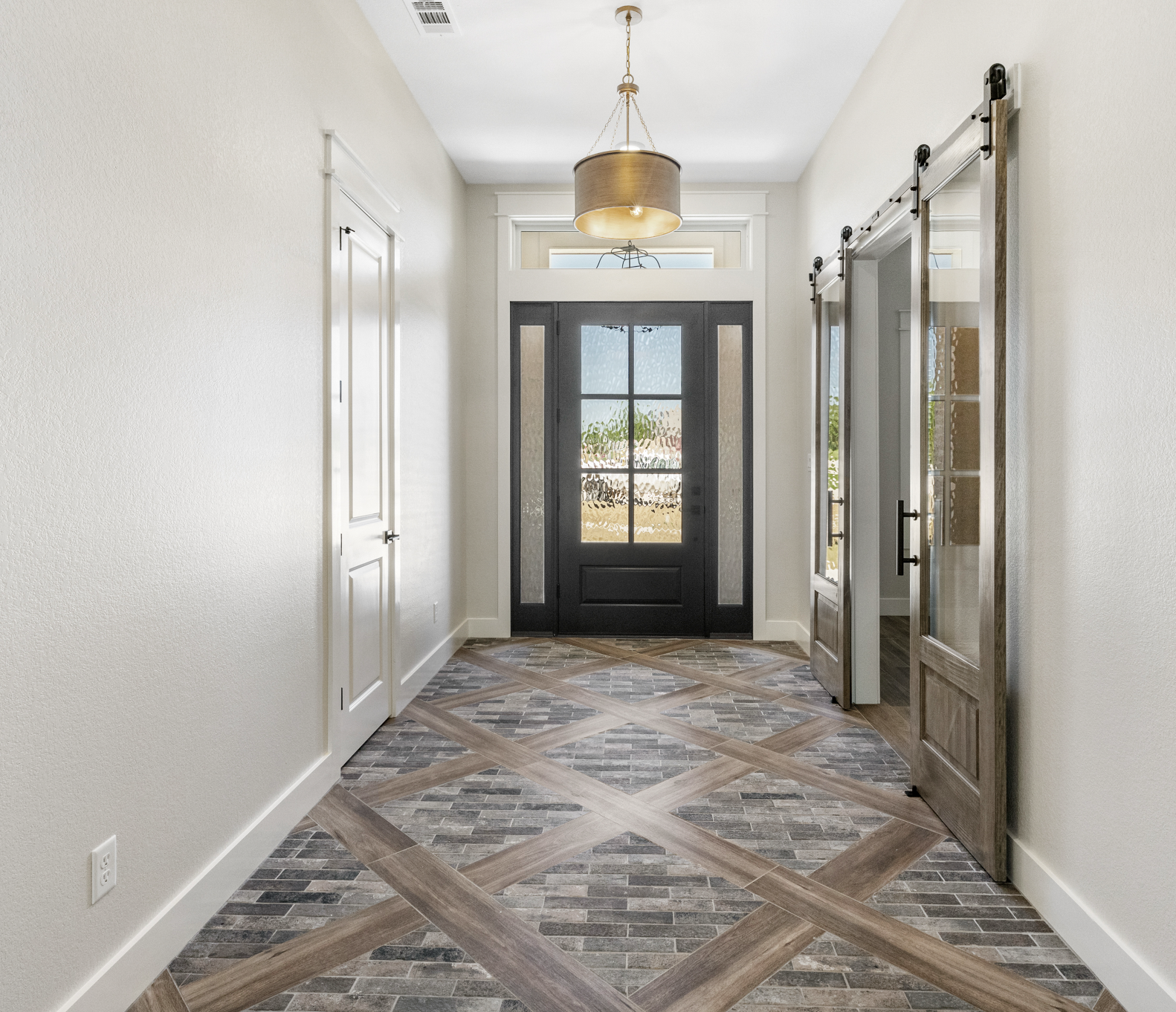
A great entryway does two jobs at once. It introduces your style the moment the door opens, and it quietly absorbs the mess that comes with real life. In Amherst, that means wet boots, salt, slush, and the kind of daily traffic that can wear down a beautiful floor fast. If you want this space to make an impression, the smartest approach is to choose a surface that looks intentional and stands up to the season.
Start with the feeling you want guests to notice
The best statement entryways do not have to be oversized or dramatic. Often, they work because the floor sets the tone right away. A lighter wood-look surface can make a narrow foyer feel more open, while deeper tones add contrast and make trim, rugs, or a painted front door stand out. In smaller homes, the floor is often the first design feature people really register, so it helps to choose something with texture and variation rather than a flat, one-note look.
That is one reason so many homeowners gravitate toward waterproof flooring in this part of Western New York. It gives you the visual impact of a finished, thoughtfully designed space while also handling the moisture that tends to collect near the front door.
Think beyond looks and plan for the mess
An entry floor sees a different kind of wear than a living room or bedroom. Dirt gets ground in. Snow melts into puddles. Pet paws add scratches, and bags or shoes get dropped in a hurry. A statement surface only works if it still looks good after all that.
For that reason, material choice matters just as much as color. Rigid, moisture-friendly options are especially practical when you want fewer worries about swelling, staining, or constant upkeep. If you like the warmth of hardwood visuals but need something easier to live with, today’s luxury vinyl flooring offers realistic texture and patterning that can anchor the whole entrance without asking for delicate treatment.
Use layout and contrast to create a custom look
Once durability is covered, design becomes more fun. A statement entryway often comes from contrast: a plank floor paired with a bold runner, a darker tone against light walls, or a subtle direction change that helps define the drop zone. Even in an open-concept layout, flooring can visually separate the entry without building a wall or adding clutter.
In Buffalo-area homes, that balance is especially useful because the front door zone has to stay hardworking. You want enough personality to make the space memorable, but not so much visual noise that everyday mess feels amplified. Floors with natural movement, low-gloss finishes, and forgiving color variation tend to age more gracefully than anything too polished or overly uniform.
Make sure you see samples in your own light
One of the biggest mistakes people make is choosing a floor under showroom lighting and then being surprised when it looks completely different at home. Entryways are affected by daylight, shadows, wall color, and whatever you see from adjoining rooms. A color that feels rich in one setting can suddenly read too gray, too yellow, or too busy in another.
That is why it helps to have samples brought to your home before making a final decision. Seeing options by your actual front door, next to your paint, trim, and furniture, makes it much easier to choose a floor that feels like a design upgrade instead of a guess. For homeowners in Amherst, that extra step can be the difference between a floor that merely works and one that truly finishes the space.
A stylish first impression should also be easy to live with
The strongest entryway designs are the ones that keep working long after installation day. When the floor can handle wet shoes, busy mornings, and constant movement, you are free to focus on the part that matters most: creating a welcome that feels like home. If you are ready to compare options for your space, request a free estimate and we’ll help you find a floor that delivers style and durability from the first step in.


