

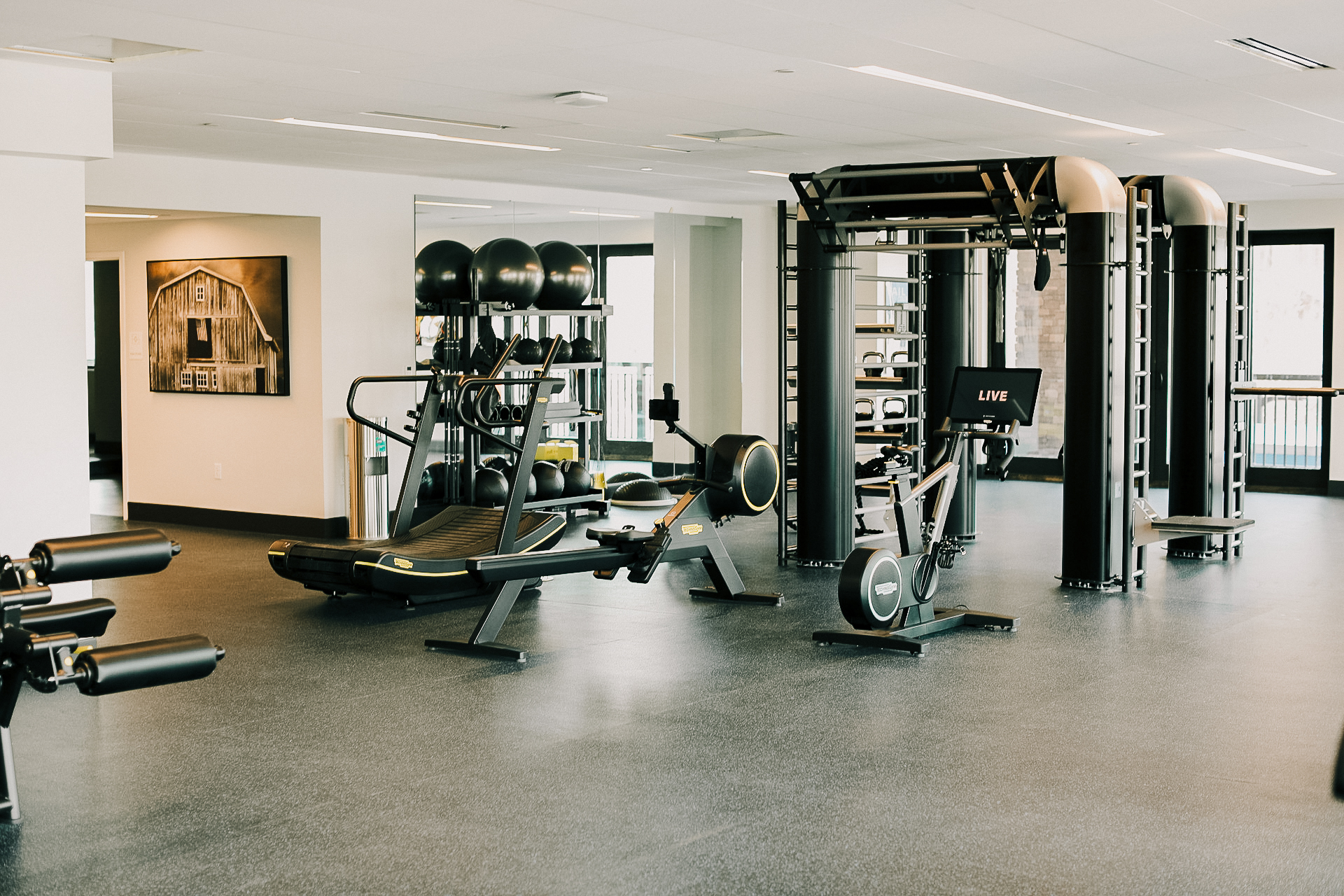
Picture this: you finally clear out the basement or spare room, move in the weights and treadmill, and start that home gym you’ve talked about for years. A few weeks later, the floor is scuffed, the room echoes, and winter slush is creeping in on your sneakers. The right flooring plan would have prevented most of that.
Designing a home workout space in our lake-effect climate takes more thought than just rolling out a yoga mat. The surface under your feet has to handle moisture, impact, and daily traffic without turning your gym into a maintenance project.
Start with how you actually work out
Before you compare samples, think about how the room will be used. A space for light stretching and stationary biking has very different needs than a weightlifting zone with dropped dumbbells and a rowing machine.
Ask yourself:
- Will there be heavy free weights or mostly bodyweight and cardio?
If you expect serious lifting, you’ll want a firm, stable surface with extra protection under racks and benches. For lighter routines, comfort underfoot and sound absorption matter more than extreme impact resistance. Clarifying this up front keeps you from overbuilding or underbuilding the floor.
Why luxury vinyl is a strong base layer for home gyms
For many Western New York homes, especially lower levels and garages, luxury vinyl flooring (LVP/LVT) is a smart starting point. It creates a durable, easy-to-clean “shell” for the room, and you can add rubber mats or tiles only where you need extra cushioning.
Modern luxury vinyl flooring gives you the look of wood or stone with a surface that stands up to sweat, shoe traffic, and equipment movement. It’s dense enough to keep machines stable, yet more forgiving than bare concrete. When you’re pushing a treadmill back into place or sliding a bench, that resilience helps prevent gouges.
In basements and ground-level spaces that see winter snow and spring dampness, pairing LVP with a moisture-tolerant core is especially important. Many homeowners who start with carpet in a gym eventually wish they had a hard, wipeable floor underneath for easier cleaning and future flexibility.
Plan for moisture, temperature, and sound
Our freeze-thaw cycles and lake-effect snow put extra stress on home gym floors. Wet shoes, condensation, and fluctuating temperatures can cause some materials to swell, separate, or grow musty over time.
If your gym is in a basement or over a slab, consider moisture resistance a non‑negotiable. Surfaces designed as waterproof flooring help protect against minor seepage, spilled water bottles, and snow tracked in from the driveway. That protection is especially valuable in older homes where concrete may not be perfectly dry.
Sound is another planning factor. A rigid, hard floor alone can make every jump squat echo through the house. Using luxury vinyl as the main surface and adding thicker mats where you jump or lift keeps noise down while maintaining a clean, unified look in the rest of the room.
Don’t forget layout, transitions, and installation
Once you’ve chosen a base material, think through how it will work with the rest of your home. You’ll want smooth transitions from hallways or adjacent rooms so you’re not stepping over awkward edges with your hands full of weights.
Professional installation makes a big difference in how long a gym floor lasts. Tight seams, a flat subfloor, and proper expansion gaps help keep planks locked together even when heavy equipment stays in one spot for years. Our in‑house crews handle these details every day as part of our broader flooring services, so you don’t have to troubleshoot buckling or shifting later.
If you’re still deciding between options, it can help to see surfaces in person. Many homeowners like to walk on different constructions at one of our Western New York showrooms before committing, especially when they’re planning a space they’ll use several times a week.
Ready to build a gym you’ll actually use?
The right flooring turns a spare room into a place you look forward to training in, not just a corner full of equipment. If you’d like help choosing materials that fit your workouts, your home, and our climate, you can request a free estimate and we’ll talk through options, measure your space, and design a gym floor built to last.


